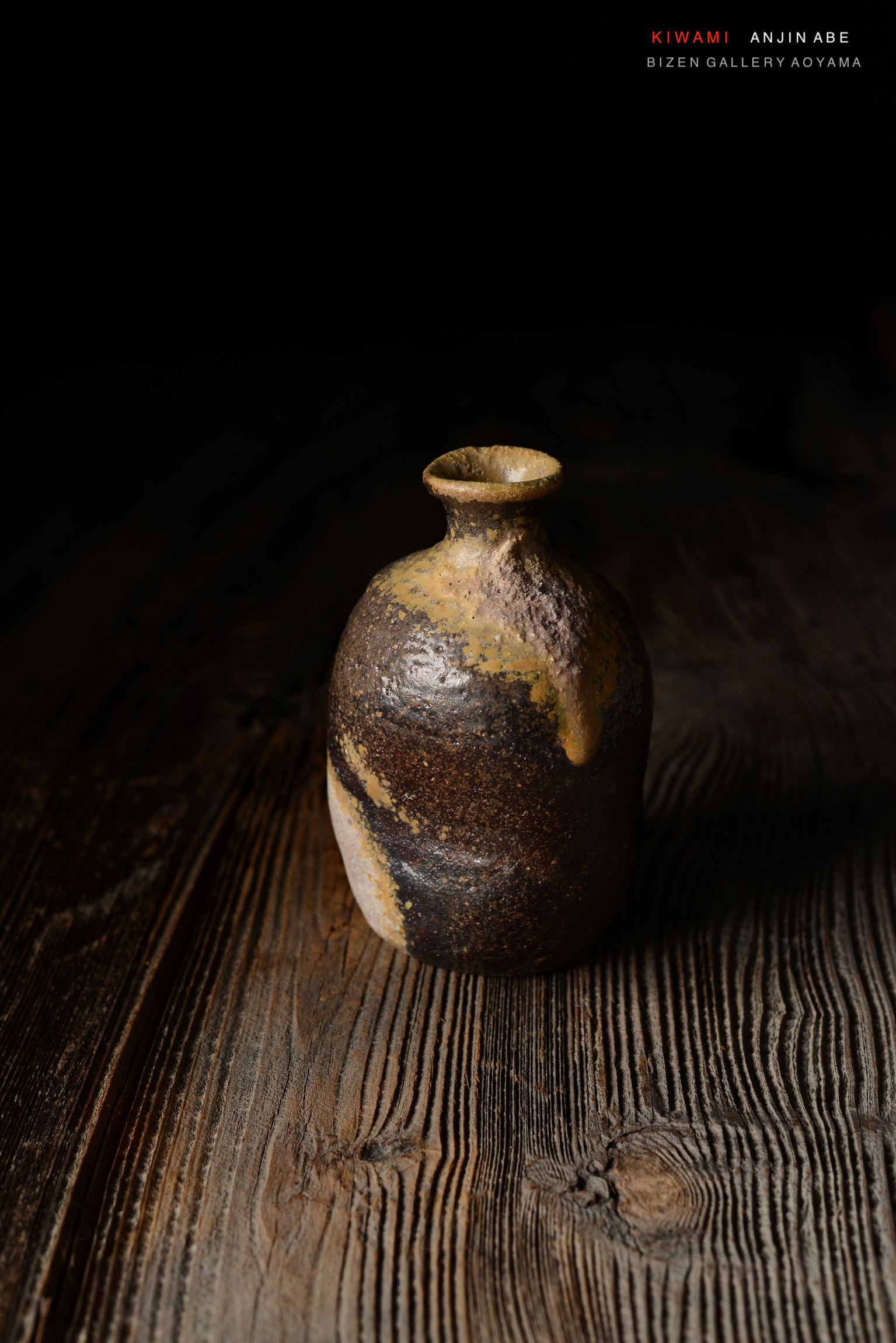
備前徳利 二重箱 | 安倍安人
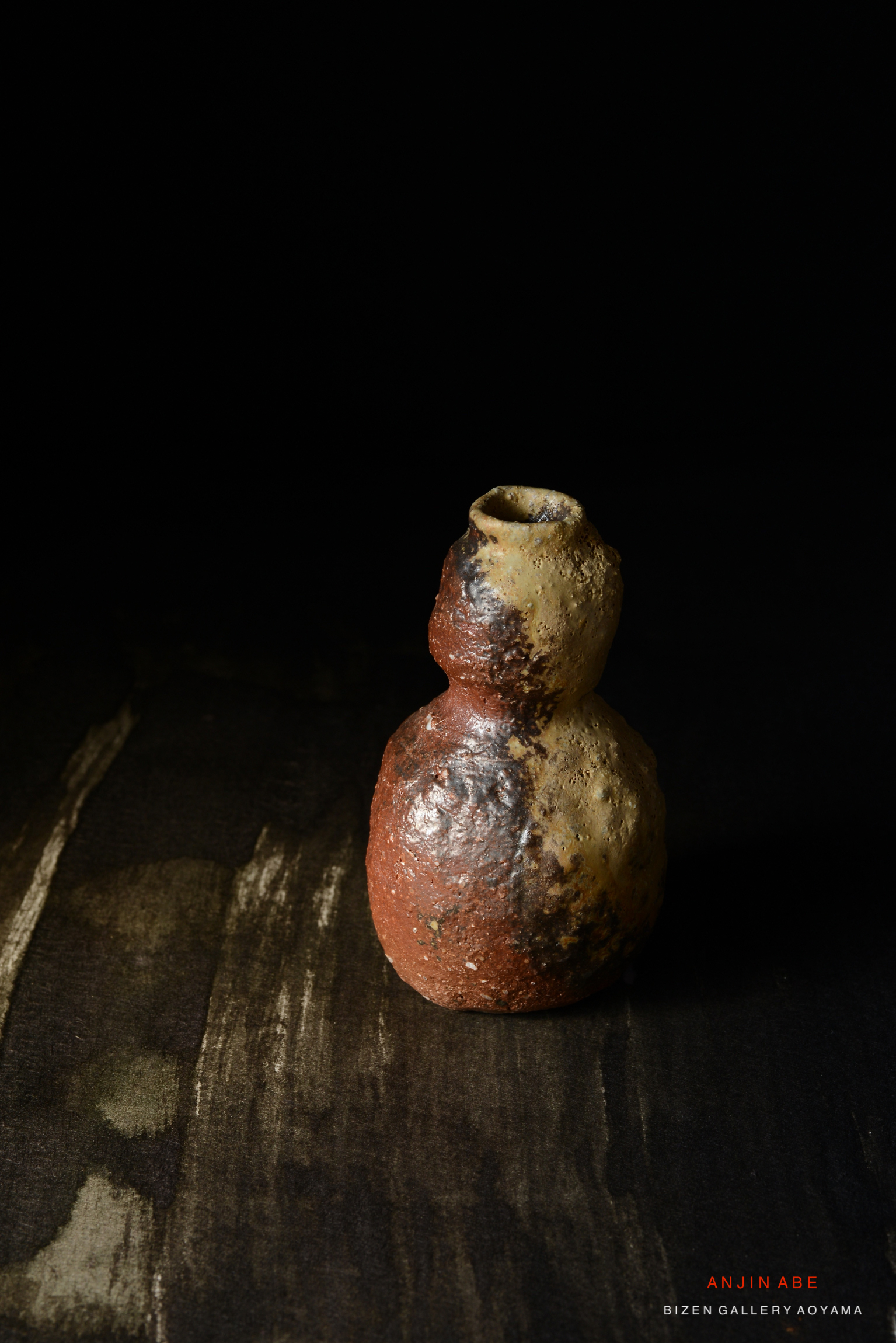
信楽瓢徳利 二重箱 | 安倍安人
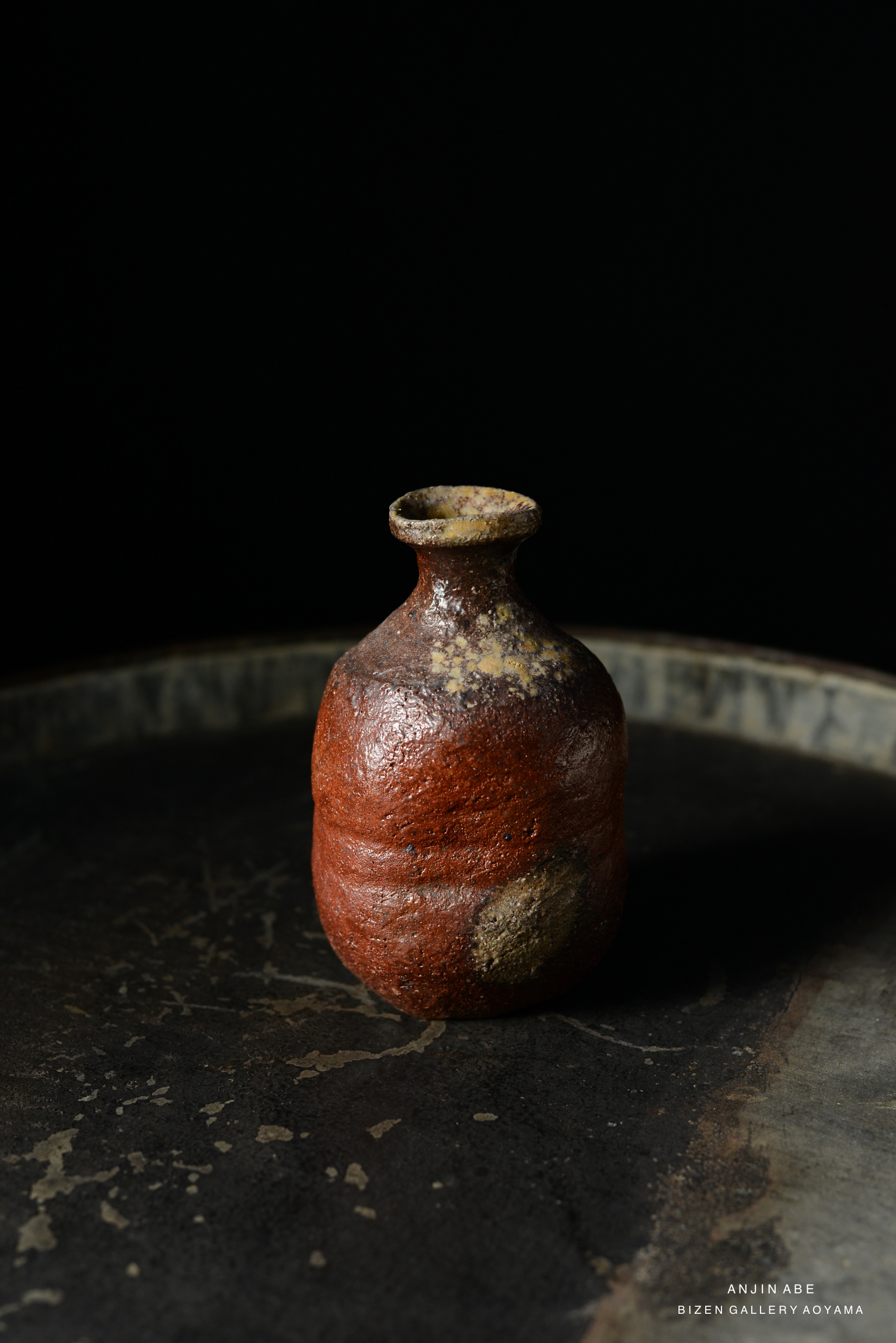
備前徳利 二重箱 | 安倍安人
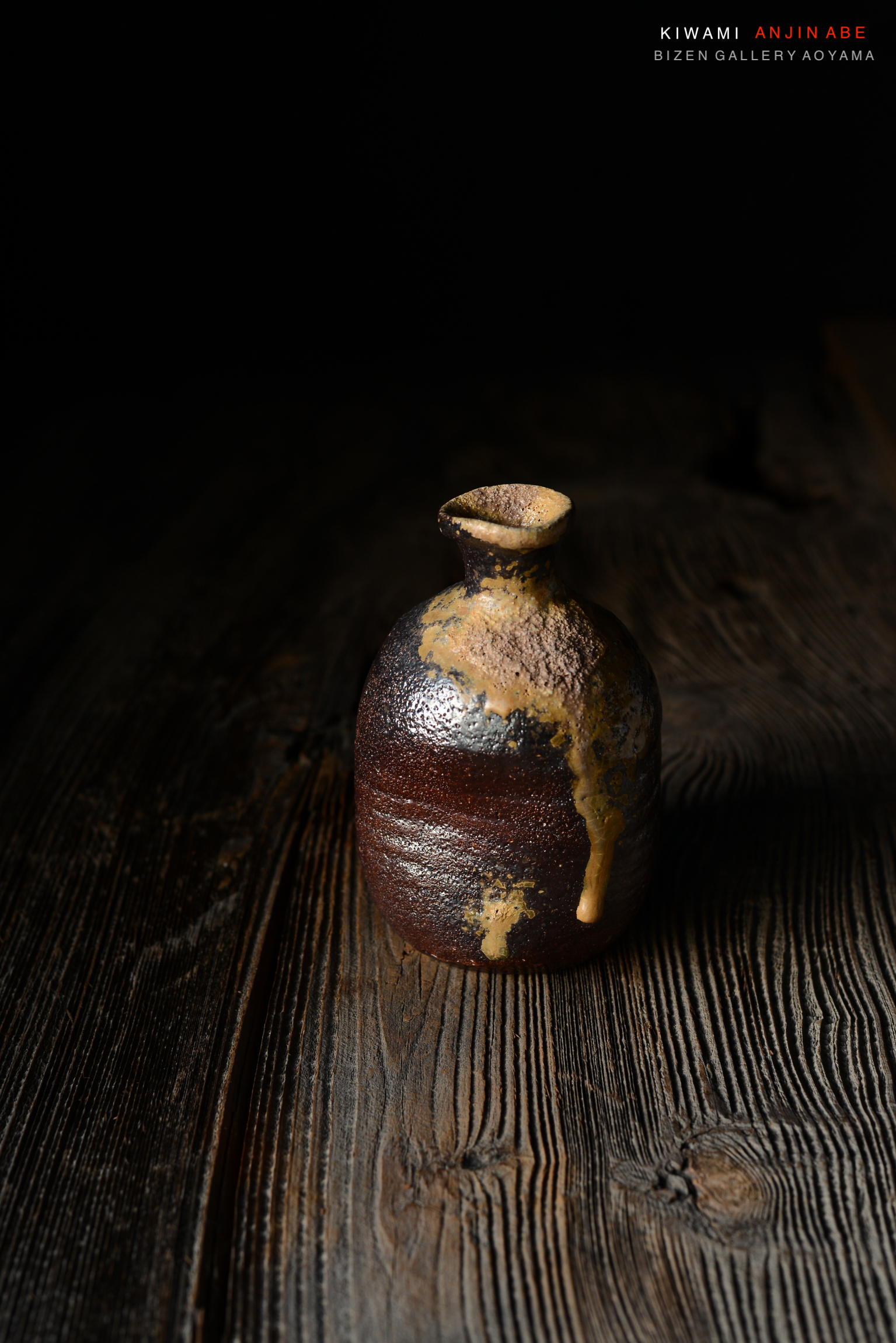
伊部徳利 | 安倍安人 | 二重箱
Wabi Suki
Bizen Tokkuri | Anjin ABE
For a long time, collectors of sake vessels have favored the combination of Karatsu sake cups and Bizen sake bottles.
Tokkuri bottles are generally used to drink warm sake in the winter. Warm sake tastes the best in cold weather. I love it.
I personally love tokkuri because they are fun-shaped objects that you can actually fill with your favorite sake and use every night.
However, since the Heisei era, with the introduction of 480ml bottles and the popularity of cold sake, the number of people using tokkuri has been declining dramatically year by year. It seems that many people today find the extra step of pouring sake into a tokkuri to be a hassle.
There are truly fewer Sukisha among modern people.
Sukisha
Sukisha (or sukimono) is a term used to refer to people who love the tea ceremony and refined arts (flower arranging, incense, etc.) and are deeply devoted to these pursuits. It often refers to people who are particularly passionate about collecting tea ceremony implements and appreciating famous tea utensils, and from the Meiji period onwards, wealthy tea masters from the financial and political worlds were called “modern sukisha” and contributed to the protection and development of Japanese art.
Wabi Suki
Wabi-suki (or wabizuki) refers to the spirit of the tea ceremony, which dates from the Muromachi to Azuchi-Momoyama periods, and which avoids extravagant utensils and luxury, and instead pursues simplicity and tranquility (wabi) amidst restrictions as the basis of beauty, as well as the people who love it. It is a uniquely Japanese aesthetic sense of tea ceremony that was created by Murata Juko, passed on to Takeno Jo’o, and perfected by Sen no Rikyu.
The spirit of “wabi”: A state of mind in which lack, deficiency, and inconvenience are not viewed negatively, but rather accepted and enjoyed with a calm mind.The beauty of tools: Instead of luxurious items, we value simple Japanese items and tools with distortions and imperfections.
Enjoy some warm sake in a premium sake bottle !!
 shizen to bizen
kanpai! 😉
Dear Jerome san,
Hello,
Thank you so much for sending such delicious chocolates!
Best regards,
Tai