What does “Maru Sankaku Shikaku” mean in Zen?
In Zen, “Maru Sankaku Shikaku (○△□)” originates from a famous calligraphic painting (Zen painting) by the Edo period Zen monk, Sengai.
To give you a concrete answer first, it represents “the origin of all things in the universe (truth)” and “a flexible mind not bound by fixed ideas.”
It is said that there are as many interpretations of this figure as there are viewers, but it mainly contains the following deep meanings:
What the three figures symbolize
◯ (Circle)
A perfect circle (enso), it symbolizes “absolute truth,” “enlightenment,” and “the universe itself” without any imperfections.
△ (Triangle)
It represents the stable position of the body when sitting in Zen meditation and the rising “fire,” indicating the energy of training and the inherent strength that humans possess. □ (Square)
This represents something stable and unmoving, that is, “earth,” which forms the land and all things.
The “Four Great Ideas” of Buddhism
In Zen Buddhism and Esoteric Buddhism, “earth, water, fire, wind, and space” are listed as the elements that constitute the universe. These are thought to be summarized in three shapes: “square (earth), circle (water/space), and triangle (fire/wind),” indicating a cosmological view that “everything in this world is made up of these three shapes.”
The Humor of Master Sengai
There is another famous interpretation of this calligraphy and painting. It is seen as the order in which the shapes are drawn as “□ → △ → ◯”.
□: A newborn human being is angular and stubborn (square).
△: Through training, the angularity is removed and one begins to become round (triangle).
◯: Finally, the angularity is removed, leading to a harmonious personality without sharp edges (enlightenment).
The above is the generally accepted interpretation.
As a pottery gallery owner, When appreciating these ceramic works, I would like to add one more point to their interpretation.
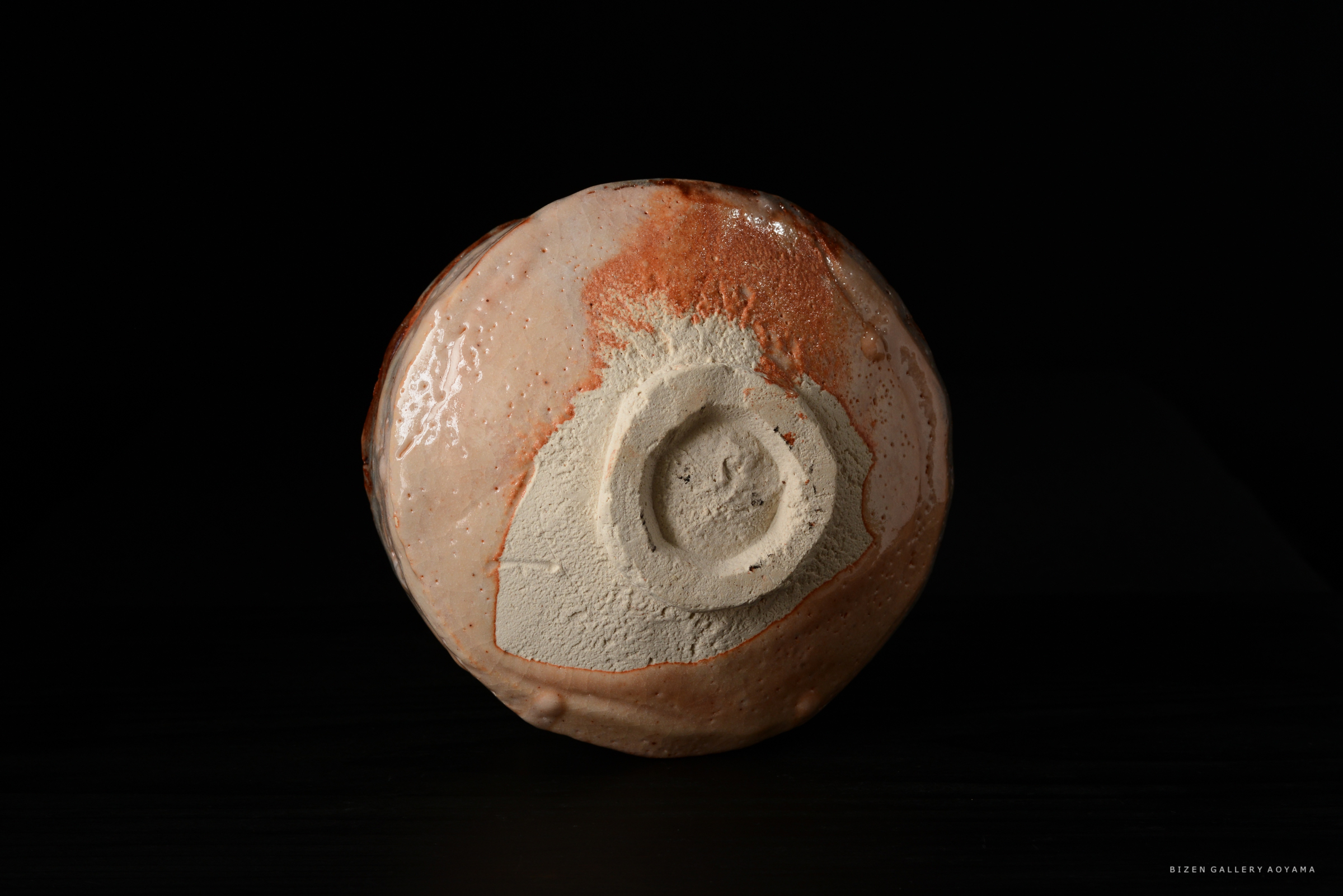
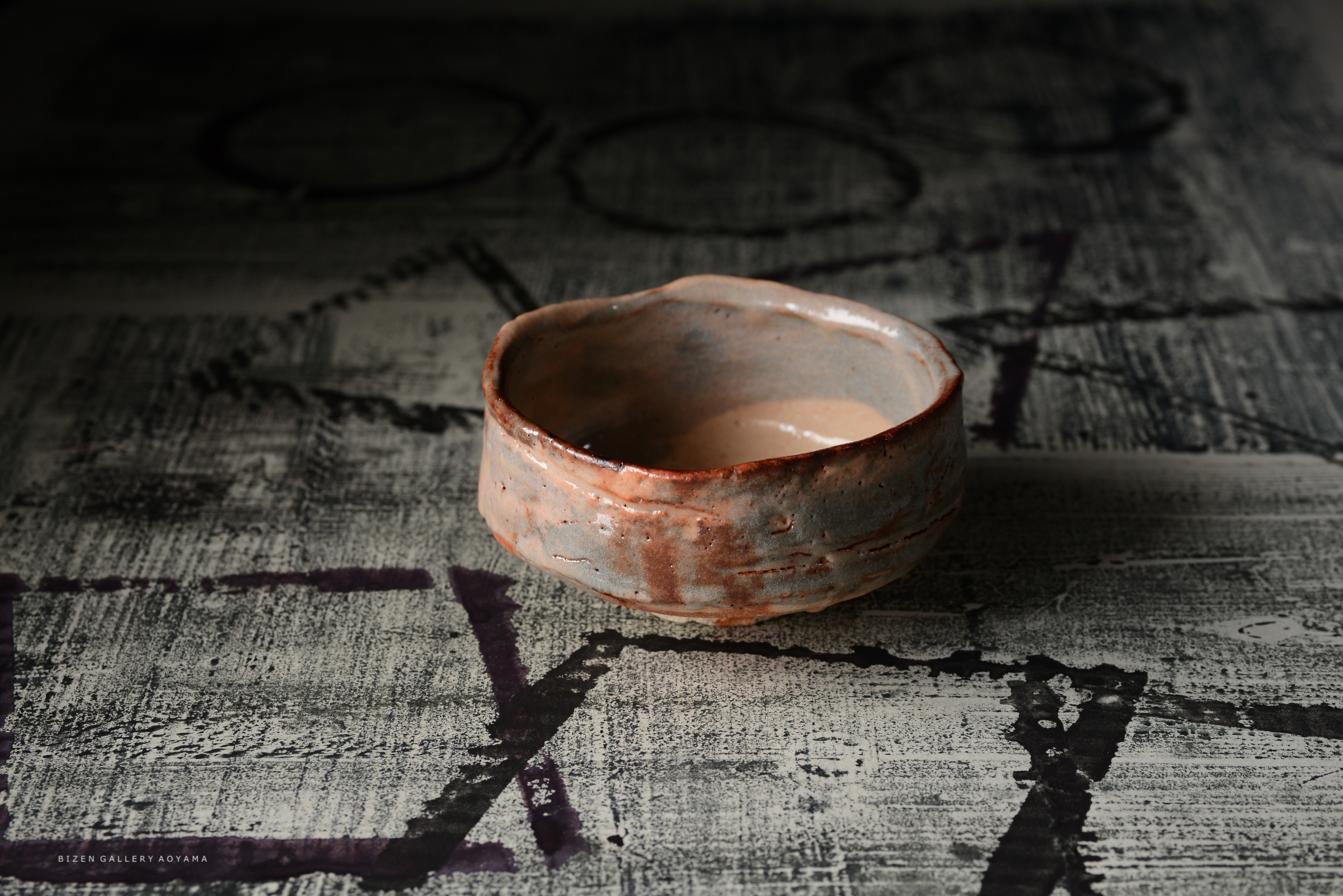
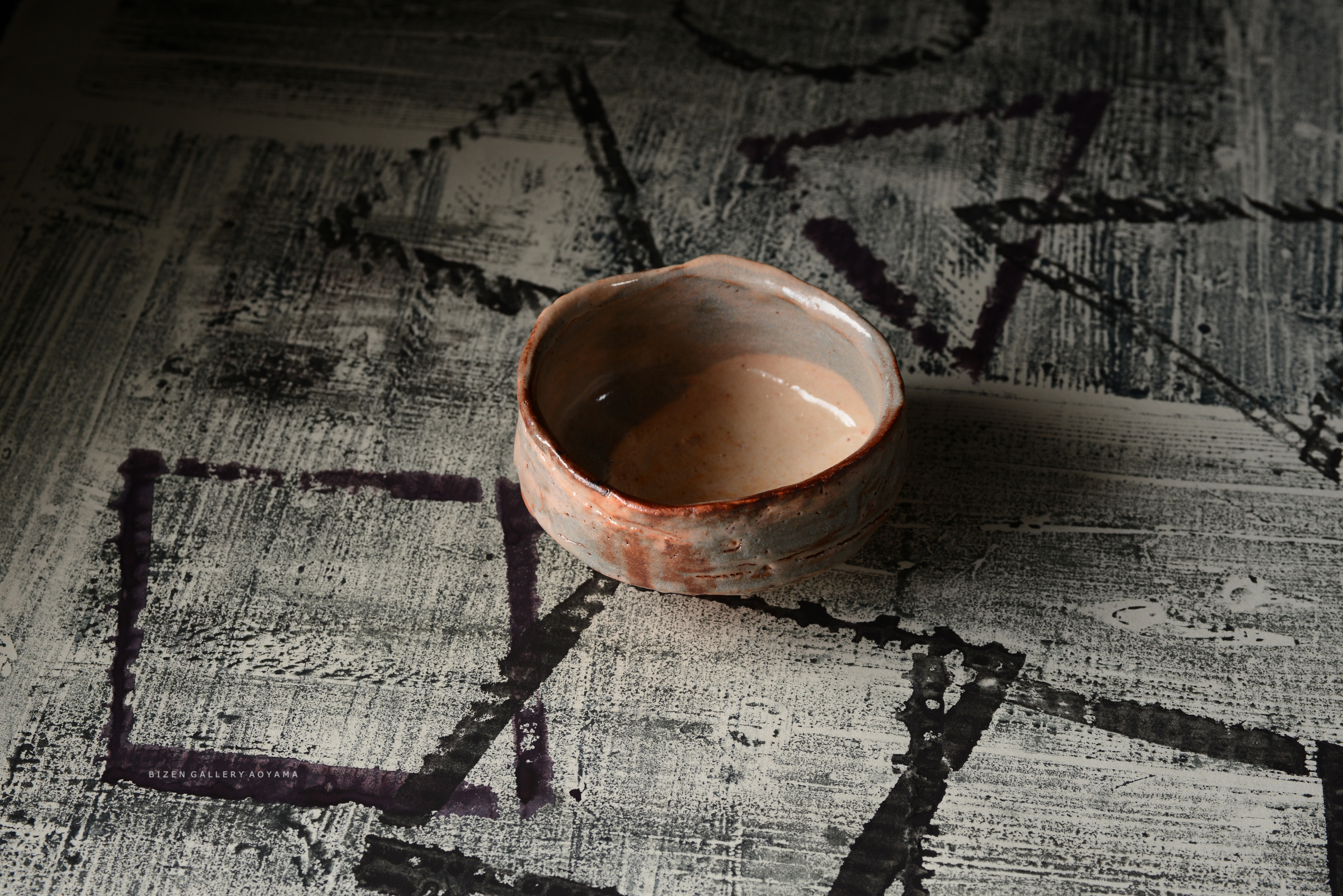
The background of this photo was created by me. When I moved to Kyoto, I bought some Japanese paper and made a simple print using it. When I observe the form of this Shino tea bowl, I think it incorporates elements of circles, triangles, and squares.
So I tried matching this homemade background paper to this chawan.
It has an Oribe-style shape. I believe that the combination of these three elements results in a unique form.
When judging a work of art from a photograph, the superficial scenery has a significant impact on the first impression. Shapes are less clear and harder to convey compared to scenery.
Even for ceramic artists, the process of perfecting a form must be a painstaking one.
I feel that this work is a testament to Ms. Higuchi’s serious approach to form.
Shino Chawan | Masayuki Higuchi
志野茶碗 | 樋口雅之
Size(cm)W14.1H7.6